
Nordic Business Call for a Clean and Competitive Europe
Nordic Businesses and Investors Call on EU Heads of States to secure the industrial and climate transition that drives growth and competitiveness
Core asks
1
Secure a predictable and consistent EU Emissions Trading System that serves as a cornerstone for industrial transformation, innovation, fair competition and without punishing early movers that have invested in decarbonisation early.2
Channel ETS auctioning revenues back to industries and transport operators to finance needed innovations and efforts to drive transition.3
Develop post‑2030 climate policy that secures long‑term investment visibility and combines security, competitiveness, and decarbonisationThe call for a clean and competitive Europe
The Nordic Business Call is a joint initiative supporting predictable, long‑term climate and industrial policy that strengthens competitiveness, investment and clean growth.
Dowload the Call
At Scania, we are convinced that decarbonization is key for the competitiveness and resilience of European industry. Scania’s purpose is to drive the shift towards a sustainable transport system, and we are investing heavily in electrifying goods and people transport. An electrified transport system is better for business, people and planet. The EU Emissions Trading System is the cornerstone of European climate policy, and it is instrumental for successful decarbonization of the whole economy. We urge EU policy makers to develop a strong and predictable post 2030 climate policy framework, building on ETS 1 and ETS 2, to secure investments, innovation, resilience, and competitiveness of European industry, while effectively reducing emissions.
Fredrik Nilzén, Head of Sustainability, Scania

Volvo Cars believes that a strong and credible EU Emissions Trading System remains central to accelerating European growth. By providing a clear carbon price signal, the ETS helps drive investment in electrification, innovation, and clean technologies, as well as rewarding first movers. To succeed, it must be stable and predictable, supported by policies & funding that strengthen Europe’s competitiveness and enable businesses to decarbonise in line with our shared climate goals.
Vanessa Butani, Head of Global Sustainability, Volvo Cars
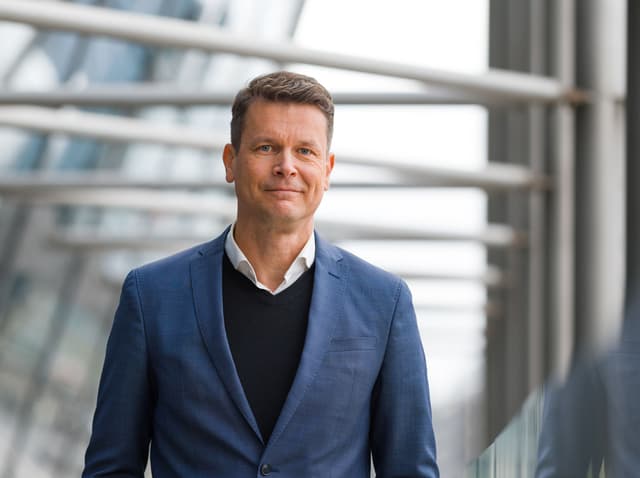
The bioeconomy isn’t a future promise for UPM. It’s already part of how we compete and grow in Europe. We produce renewable fuels, chemicals and advanced fibres that replace fossil‑based materials and support high‑value industrial jobs. Scaling this model depends on a credible EU ETS and a predictable long‑term climate framework. That’s why UPM has signed the Nordic Business Call for a Clean and Competitive Europe. Climate progress and competitiveness go hand in hand.
Stefan Sundman, Vice President, Public Affairs, UPM

The steel industry transformation is essential to remain competitive and maintain an innovative edge. Investing in new technology delivers emissions reductions alongside higher efficiency, lower operating costs and greater energy resilience. These investments are long‑term and require stable, credible policy frameworks. With the EU ETS review approaching, it is crucial not to change its fundamentals or agreed timelines. A predictable ETS underpins confidence, supports first movers and enables Europe’s industrial transformation.
Helena Norrman, EVP & Head of Group Communications, SSAB
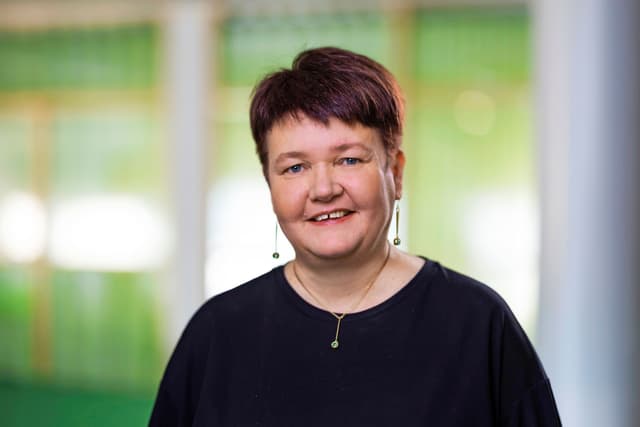
The EU Emissions Trading System is a necessary, market‑based and cost‑effective instrument for reducing greenhouse gas emissions. ETS and market based carbon pricing has guided S Group to invest in energy efficiency and low‑emission solutions. Common EU‑level rules create predictability, accelerate the green transition and support the achievement of climate targets without undermining economic growth or competitiveness.
Nina Elomaa, Chief Sustainability Officer, S Group

Banks play a crucial role in the climate transition by allocating capital towards companies and projects that are commercially and financially viable. Policy certainty is essential when companies make long-term investment decisions, and sudden changes risk disrupting business models as well as undermining Europe’s credibility. Weakening ETS would be a wrong signal to businesses while harming both climate goals and competitiveness.
Samu Slotte, Head of Sustainable Finance, Danske Bank.

We in Fortum strongly support the EU ETS as the primary, market-based and cost efficient tool for the EU decarbonisation. In the upcoming revision of ETS, the integrity of the system as a cornerstone of Europe’s climate, competitiveness and resilience strategy has to be safeguarded. We advocate for a robust carbon price and alignment of the ETS cap with the 2040 and 2050 climate targets to drive efficiency and investments, while recycling revenues to industry and managing competitiveness risks.
Nebahat Albayrak, EVP Sustainability and Corporate Relations, Fortum

As a telecom and technology company with climate targets validated by the Science Based Target initiative, we support ETS policy consistency and long-term investment visibility as essential conditions for credible decarbonisation commitments. Post-2030 climate policy must make security, competitiveness, and decarbonisation achievable together.
Kati Nyman EVP, Corporate Chief of Staff, Elisa
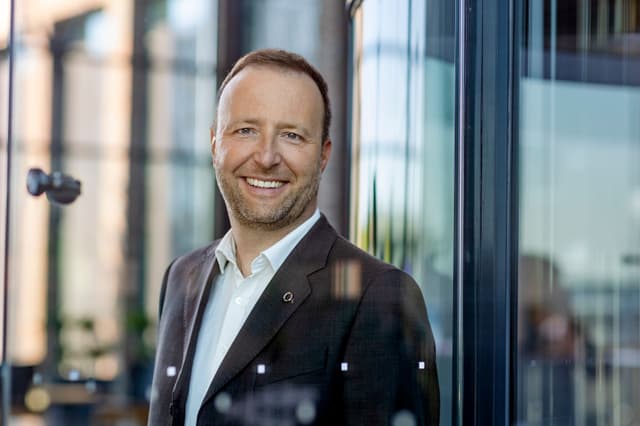
At Outokumpu, we have proven that decarbonization in the steel industry is not only possible, but essential for Europe’s future. By using over 90% recycled material, we have reduced our carbon footprint to 75% below the industry average. This leadership demonstrates that climate ambition and industrial competitiveness can go hand in hand—provided there is a clear, predictable policy framework that rewards early investment and innovation. A strong and predictable EU ETS is essential, as it provides the long-term investment signal needed for companies to commit to low-emission production. CBAM is a necessary complement to ETS, ensuring imports face an equivalent carbon cost and supporting a level playing field for European industry.
Matthieu Jehl, President, Business Line Stainless Europe, Outokumpu

Europe has overcome seemingly impossible transitions before. What once sounded utopian, clean energy from hydropower, wind, sun and other renewables, is now a core part of Europe’s power system. The next leap demands the same courage: uniting behind the best available technology, predictable climate policy, and fair carbon pricing. When industry and policymakers move in step, clean competitiveness is not a hindrance. It is a major opportunity for Europe to lead the way.
Bjørn Fjellstad, CEO, Vestre

Finnish companies need predictable, long-term rules that make investing in renewable energy, hydrogen solutions and low-carbon industrial processes truly profitable. A strong and credible EU-wide emissions trading system is a key driver in this: without it, investments will not scale, value chains will not develop, and the transition to a hydrogen economy will remain incomplete. A sustainable industrial transformation is achieved when climate targets, regulation and business models reinforce each other.
Iida Vakkuri, Chief Sustainability Officer, Sweco Finland
Nordic Business Call signatories represent
80
Large Nordic companies€303 billion
in annual revenue653,000
total employeesNordic Businesses and Investors Call on EU Heads of States to secure the industrial and climate transition that drives growth and competitiveness
Copenhagen, Helsinki, Stockholm, Oslo, Tallinn 13.5.2026
Dear President of the European Council, President of the European Commission, European Heads of States, Members of the European Parliament and National decision makers in Nordic countries,
As you negotiate the future of European Emissions Trading, the decisions you make will shape Europe’s ability to address the climate crisis and, critically, investors’ trust in European decision‑making.
This trust depends on a strong, predictable and technology‑neutral framework that rewards emissions reductions in industry and transport wherever and however they are delivered.
That’s why we, the undersigned Nordic-based companies and investors representing 80 large Nordic companies with a combined global annual revenue of €303 billion and employing 653,000 people, call on you to safeguard and strengthen the integrity of the EU ETS as a cornerstone of Europe’s climate and competitiveness strategy.
The Nordics offer proof that clean competitiveness is achievable at scale. As the world’s 12th-largest economy, we demonstrate how early investment, technological leadership and market integration can deliver both industrial strength and rapid decarbonisation.
The Nordic energy system delivers Europe’s lowest power costs and lowest emissions, a direct result of decades of forward-looking investment in clean generation and deep cross-border market integration. Hydro, onshore and offshore wind, solar and nuclear are all developed across borders with interconnection to provide flexibility, price convergence and resilience; the very attributes Europe now needs to scale.
This progress is the result of determined action by companies, paired with political leadership that has put a meaningful price on carbon and established the essential building blocks for the transition. Nordic companies are now leading Europe’s decarbonization trajectory.
The EU Emissions Trading System has strengthened the integrity of the Single Market, enabled consistent investment signals for industrial transformation and reduced emissions remarkably. Through the Carbon Border Adjustment Mechanism, this approach promotes fair competition and encourages trading partners to advance their own carbon pricing systems.
As companies, we are investing at scale and deploying clean solutions across our value chains. But to strengthen Europe’s competitiveness and crowd in private capital, we need a clear policy framework that aligns industrial renewal and energy security with climate action, and that actively supports innovation, first‑of‑a‑kind deployment and industrial R&D.
To unlock new investments, scale clean value chains, accelerate economic growth and strengthen resilience, we appeal to you to put in place policies that:
Secure a predictable and consistent EU Emissions Trading System that serves as a cornerstone for industrial transformation, innovation, fair competition and without punishing early movers that have invested in decarbonisation early.
Channel ETS auctioning revenues back to industries and transport operators to finance needed innovations and efforts to drive transition.
Develop post‑2030 climate policy that secures long‑term investment visibility and combines security, competitiveness, and decarbonisation, rather than treating them as conflicting objectives.
Accelerate power‑sector decarbonization and deepen the integrated European energy market by ensuring efficient market operation and securing clean, affordable electricity to support electrification.
Nordic business stands ready to co‑invest, co‑innovate and co‑deliver. A credible, long‑term framework will catalyze investments, boost productivity, lower energy costs, and strengthen Europe’s strategic resilience.
We thank you for your leadership and remain at your disposal to help turn these commitments into implementation.
Partners
Climate Leadership Coalition
The Call is initiated and led by CLC, which is a leading non‑profit climate business network, bringing together companies whose members collectively employ over a million people worldwide. Through collaboration with companies, cities, Nordic governments and European policymakers, CLC advocates for market‑shaping mechanisms with global reach to drive a fair transition and decarbonize value chains beyond EU borders.

The Haga Initiative
The Haga Initiative is a network of large companies, in Sweden. Together we show leadership for a profitable business sector without negative climate impact. Haga Initiative wants to influence policy decisions to promote climate action. We believe that high climate ambitions provide great opportunities, create jobs, strengthen the Swedish welfare and make Swedish business more competitive worldwide.

Skift
Skift is Norway’s leading business-led climate initiative, bringing together forward-looking companies committed to accelerating the green transition. Through collaboration, knowledge sharing, and advocacy, Skift helps businesses cut emissions, adopt sustainable solutions, and push for stronger climate policies.