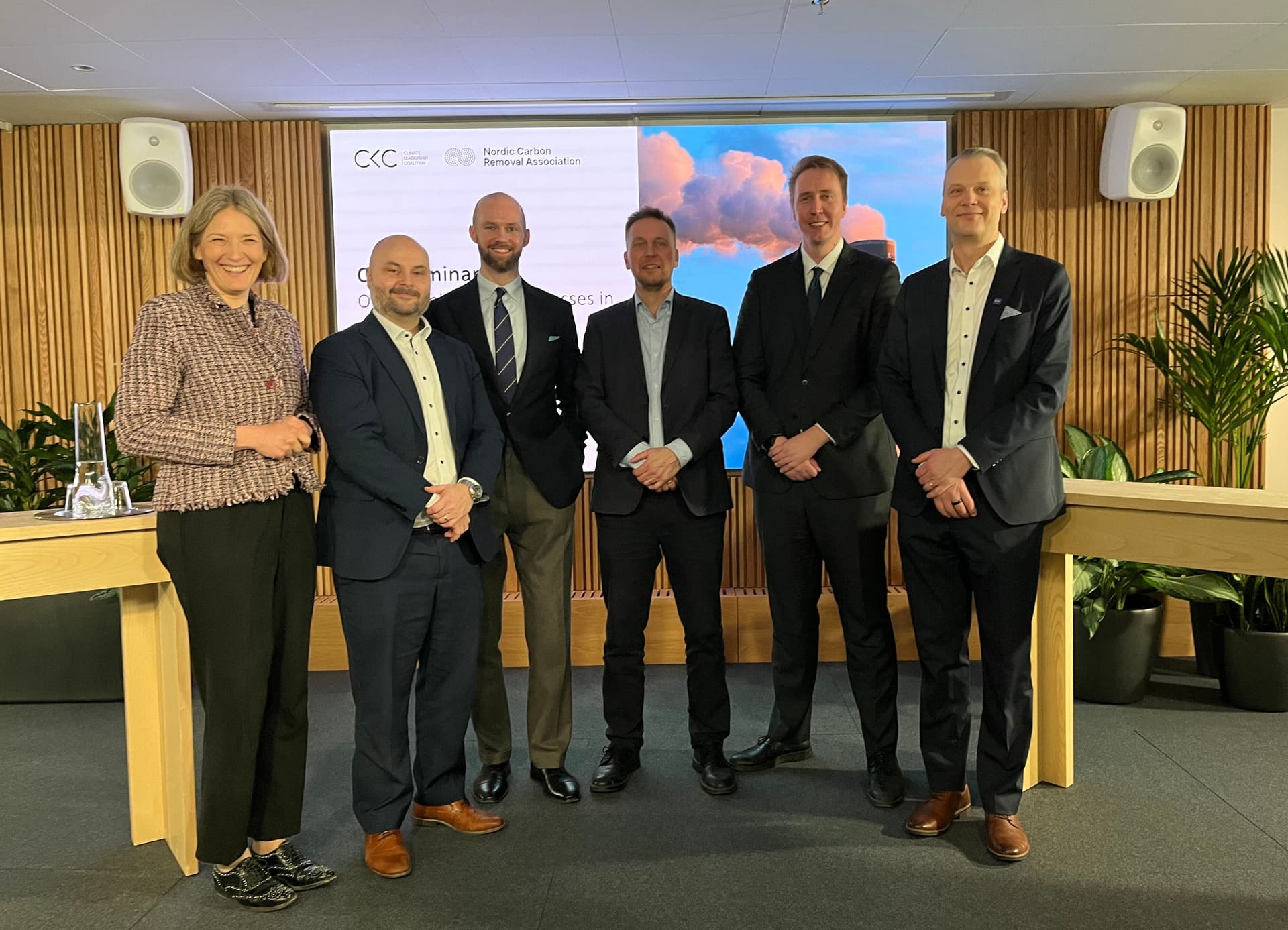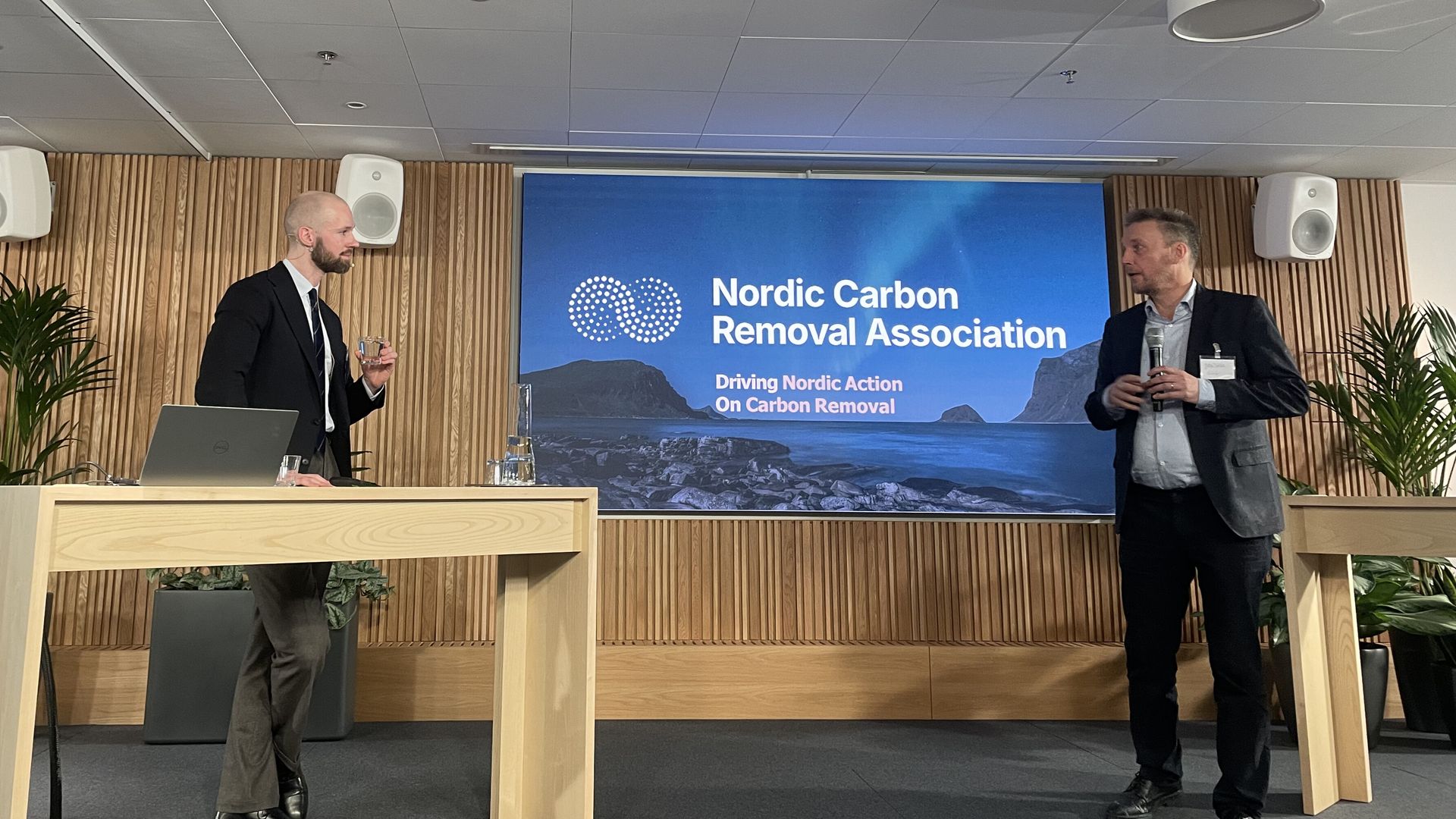
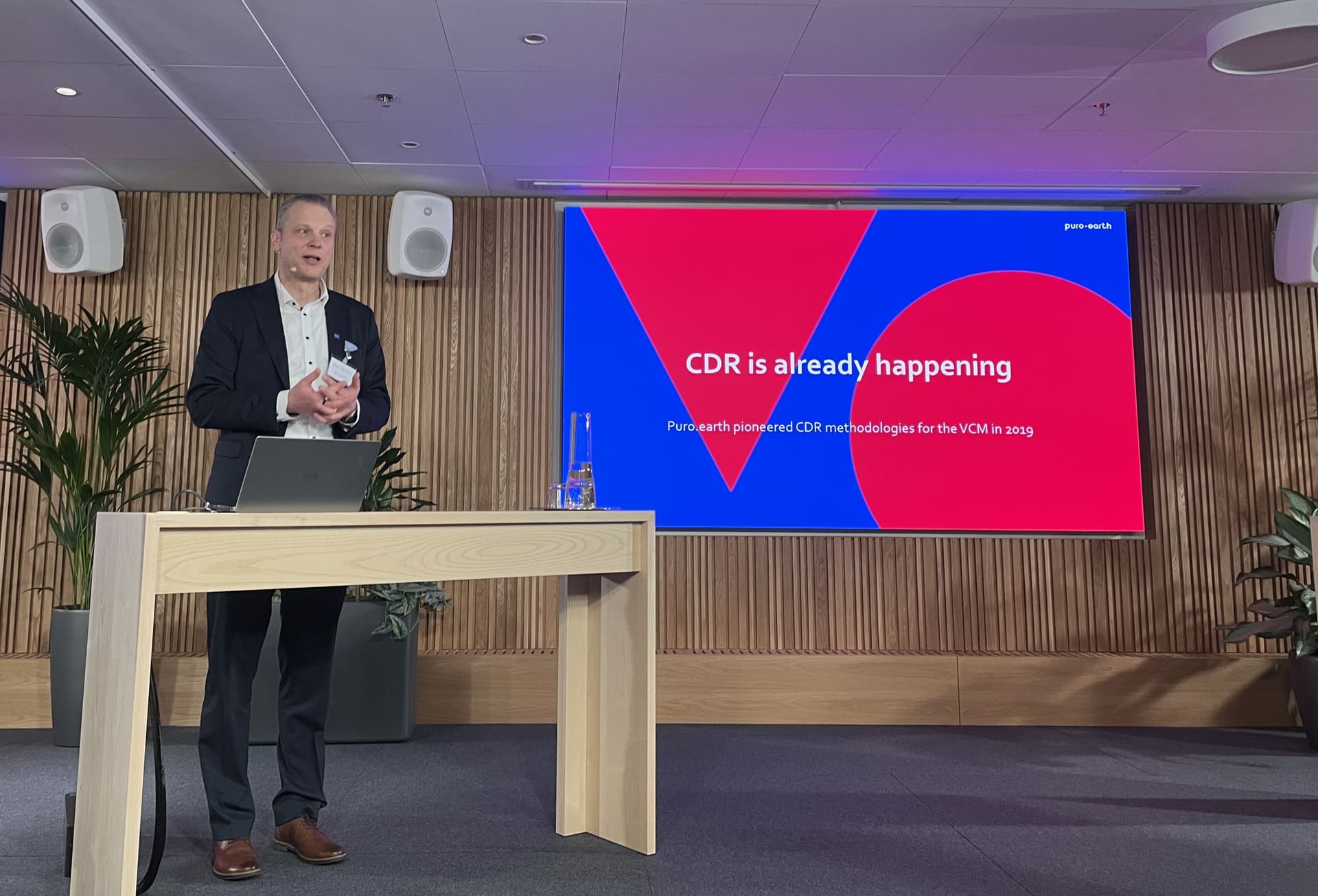
On March 3 Climate Leadership Coalition hosted a seminar in collaboration with the Nordic Carbon Removal Association to examine the role of carbon dioxide removal in reaching climate targets and the opportunities emerging for companies across the Nordic region. The event gathered experts from finance, policy, technology and industry. Speakers included Anssi Kiviniemi from SEB, Alexander Mäkelä from Carbon Gap, Valter Selén from the Nordic Carbon Removal Association and Antti Vihavainen from Puro.earth.
CDR market is entering a scale up phase
Although deep emissions reductions remain the foundation of climate action, mitigation alone will not be sufficient. CDR is needed for net-zero targets and for removing the emissions emitted before we reach net-zero. For net-zero CDR is especially required in the hard-to-abate sectors such as stee, cement, aviation and agriculture that will have residual emissions even after deep emission reductions.
The CDR market is gradually shifting from early experimentation to a scale up phase. Carbon removals are increasingly included in corporate climate strategies, and demand is expected to rise as net zero targets approach. Current market activity shows growth in permanent CDR commitments with BECCS (bioenergy with carbon capture and storage), biomass removal and biochar leading current volumes, while DAC (direct air capture) and enhanced weathering are increasing from a lower starting point. Although interest is rising, absolute purchase volumes remain modest.
EU signals support, with €58+ billion committed in public support for carbon removal and broader carbon management infrastructurefrom both EU level programmes and the member states.While these financial instrumentsunderpin essential infrastructure and de-risk early-stage projects, long-term regulatory visibility and predictable carbon management frameworks remain critical for investment. Developing high-quality removal projects requires multi-year planning, infrastructure readiness, and robust certification systems.
Despite many support schemes alreadybeing in place, the industry faces a persistent revenue gap that makes commercialization difficult and scale-up slow. A broader buyer base is needed for a stable market; today, a handful of large purchasers dominate total volumes while many suppliers struggle to move from pilots to commercial scale due to limited long-term offtake.
To further catalyse growth, the EUCommission is designing a "Buyers’ Club" that aims to address the fragmentation of private demand by aggregating purchasing power across corporate buyers. By coordinating voluntary corporate purchasing through a common platform, the Buyers’ Club is designed to create the predictable demand signals neededfor final investment decisions and help support the emergence of a bankable European removals market.
For businesses, early involvement is the key
The seminar highlighted that carbon removals will ultimately be needed in many companies. However, the path forward is not yet fully clear. The Science Based Targets initiative (SBTi) has not yet issued detailed guidance on removals, and the structure of the European Union Emissions Trading System (EU ETS) in relation to removals remains under development.
While clearer guidance is needed, companies can andshould begin preparing their removals strategies now.
Early buyers can secure greater price certainty and access to high-integrity credits as the market matures. Purchasing today supports learning-curve cost reductions across technologies such as DACCS(direct air capture with carbon storage), enhanced weathering, biochar, and mineralization. Moreover, durable removals strengthen the credibility of long-term climate plans and improve transparency for investors and stakeholders
Nordic region is well positioned for leadership
The Nordics have an especially strong foundation for large scale CDR deployment. The region holds 43 to 69 percent of Europe’s geological storage potential and benefits from vast biogenic CO₂ point sources, mineral deposits and ocean access for several removal pathways. Low cost and reliable carbon free electricity, well developed district heating networks that enable efficient use of waste heat and a supportive policy environment further strengthen the Nordic position.
"In the Nordics we should work closer, selling the’ Nordic approach’ and driving demand in the region"
Valter Selén, Nordic Carbon Removal Association
Individual Nordic countries also bring complementary advantages. Sweden and Finland have strong potential for BECCS and biochar. Iceland offers natural conditions suited for DACCSand onshore mineral storage. Norway combines large geological storage with proximity to offshore transport infrastructure, while Denmark provides significant potential for BECCS, DOC (Direct Ocean Capture) and both onshore and offshore storage. Together, these strengths create an ecosystem where countries can reinforce each other through shared storage solutions, biomass flows, infrastructure, and export routes