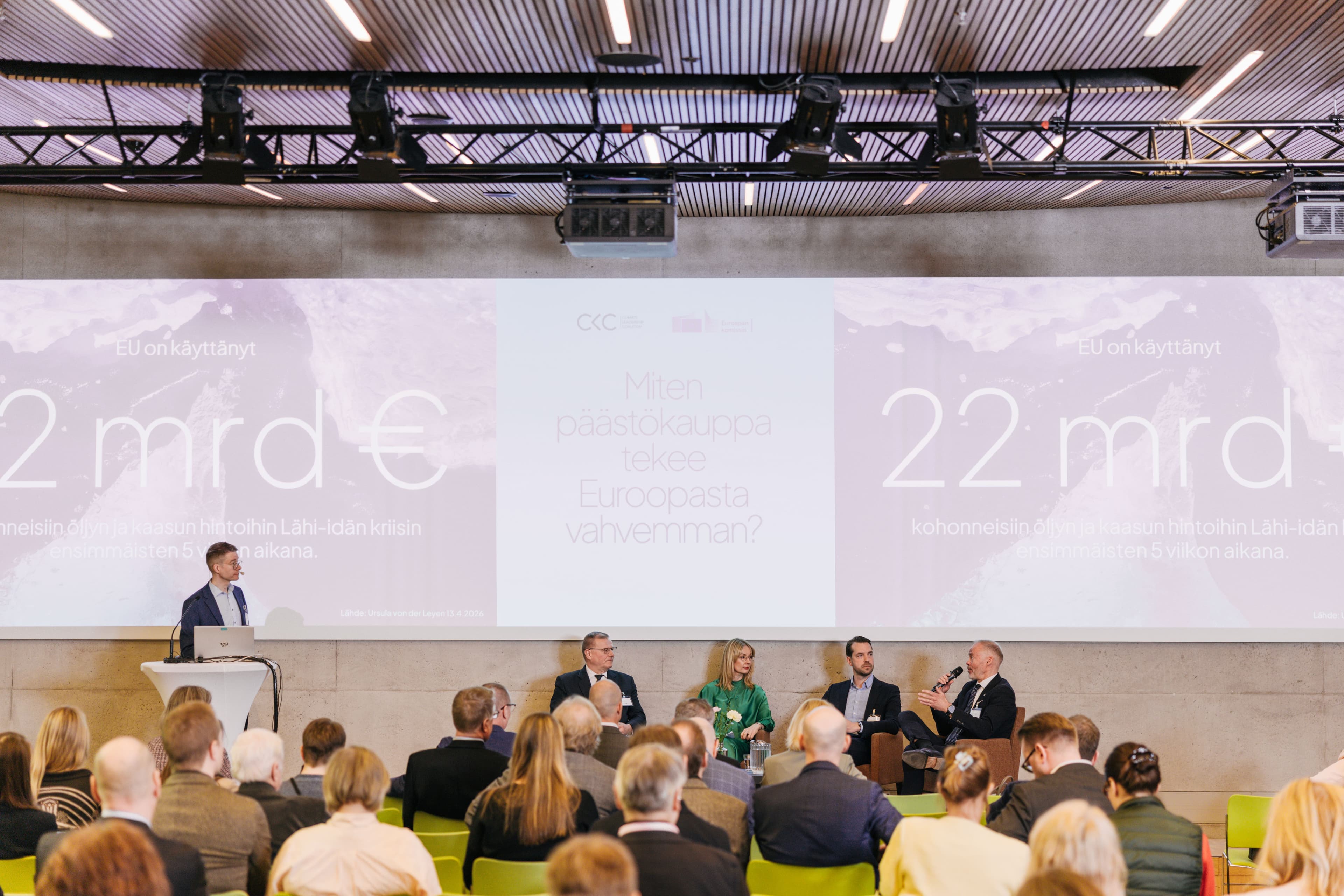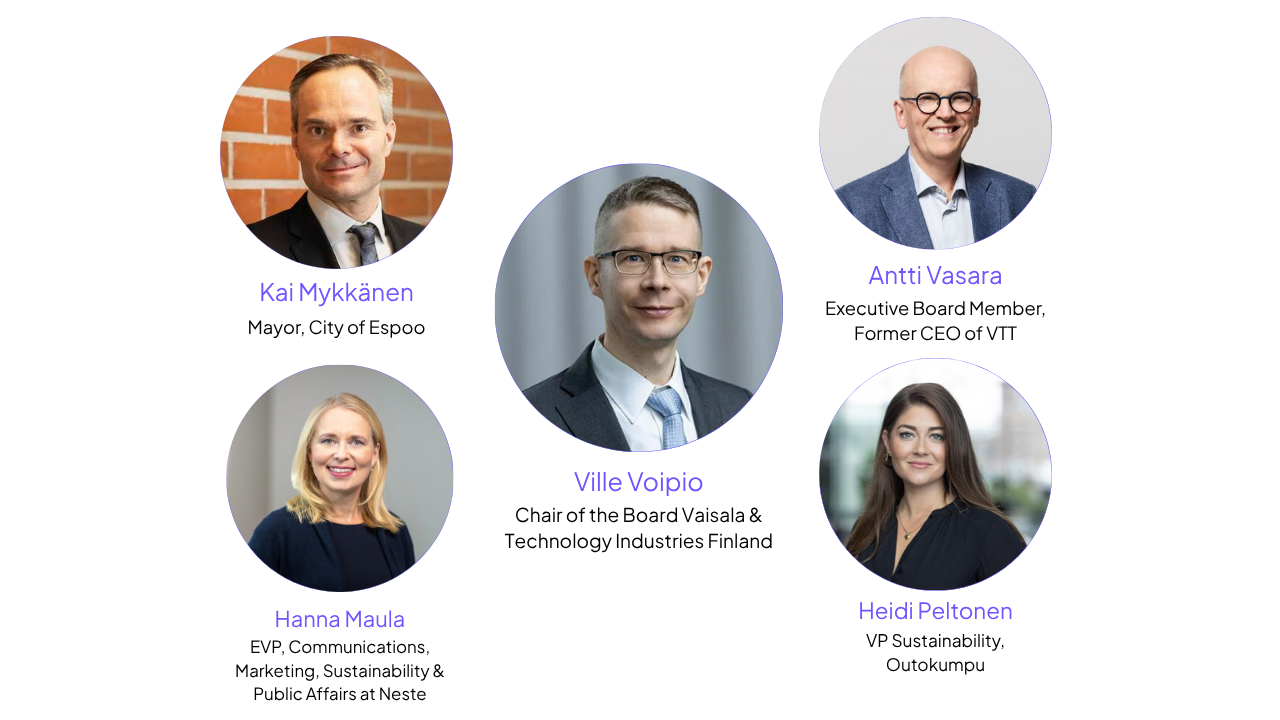
Yesterday, CLC's Fall Meeting elected a new board for 2025-2026. As Sari Baldauf is stepping down as the Chair, Ville Voipio steps into the role to lead CLC into its next chapter. The new board will steer CLC’s strategic direction at an important moment for advancing climate solutions and strengthening collaboration both in the Nordics and internationally.
Ville Voipio, the newly elected Chair of the Board, sees CLC as a key driver of the green transition. Calling the chairmanship a ‘dream role,’ he says it brings together two of his long-standing focus areas: green and growth. Drawing on both his business and scientific experience, and years of leadership on various boards, Voipio brings a broad perspective that connects the interests of the planet and the economy.
"We are living in turbulent times where climate issues often get pushed aside. I hope to see more long-term thinking and an understanding that solutions can reinforce one another, actions to mitigate climate change also strengthen our resilience"
- Ville Voipio, Chair of CLC Board
The newly elected board brings fresh perspectives with several new members joining its ranks. Kai Mykkänen, Major of the City of Espoo, and Antti Vasara, Executive Board Member and former CEO of VTT, join as board members while Hanna Maula, SVP, Communications, Marketing, Sustainability & Public Affairs at Neste, and Heidi Peltonen, Vice President of Sustainability of Outokumpu join as new vice members of the board.
Key insights on navigating the current climate policy landscape
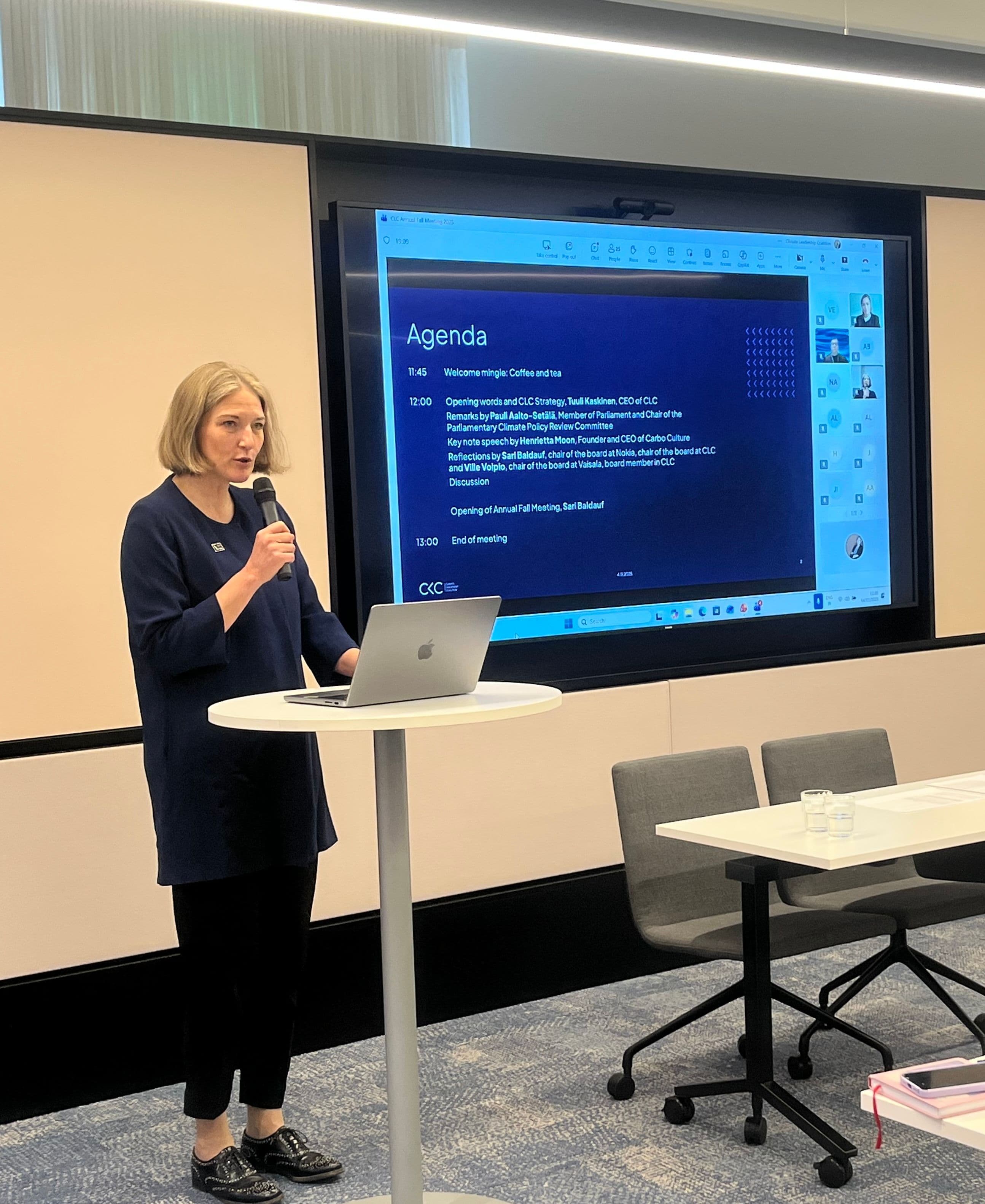
The fall meeting also provided timely and important reflections on CLC's role and ways for it to navigate and have an impact on today’s shifting climate policy landscape. What is important:
- Global diplomacy is under pressure as multilateral cooperation gives way to more transactional approaches. Progress on climate will increasingly depend on pragmatic solutions and diverse alliances across sectors and borders.
- Businesses are driving the green transition, accounting for over 70% of global investments. Industrial transformation and innovation will be critical to accelerate progress and maintain competitiveness.
- For Nordic companies, agility and innovation are key. By leveraging cutting-edge technologies and building strategic partnerships, they can scale climate solutions globally, enhance resilience, and strengthen their leadership in the green economy.
Pre-webinar on climate policy priorities and carbon removals
Before the official agenda, the fall meeting opened with a pre-webinar for all CLC members, featuring two timely keynote presentations. The first was delivered by Pauli Aalto-Setälä, Member of Parliament, Chair of the Parliamentary Climate Policy Review Committee, and CLC’s newest individual member. Aalto-Setälä noted that climate policy is at a critical juncture as EU member states debate the 2040 target in Brussels. He reaffirmed Finland’s commitment to the EU’s 2040 goal, noting that major economies around the world still need to step up their efforts.
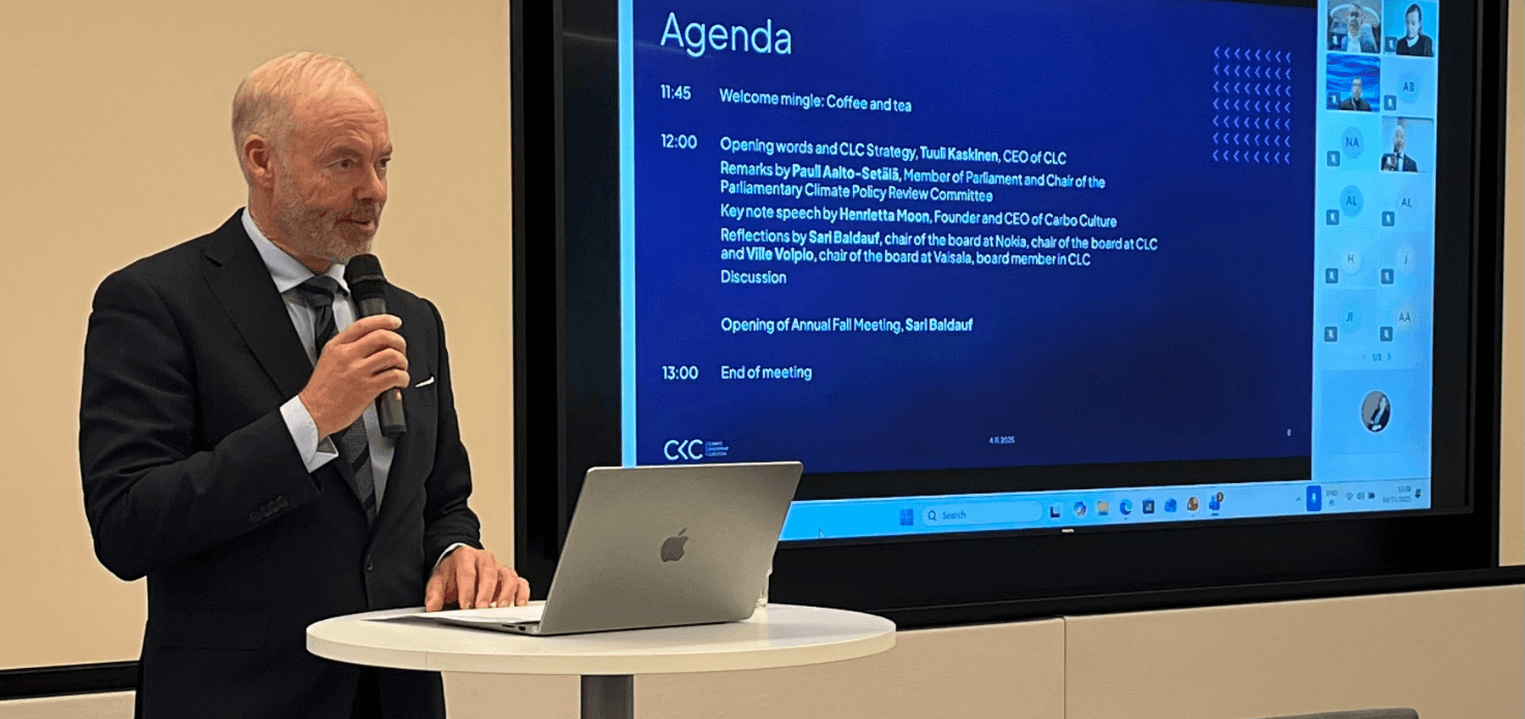
With much of the world’s focus now on security, Aalto-Setälä stressed the importance of continuing progress on adaptation and practical solutions, including at the upcoming COP30 in Belem. He highlighted the need for technical carbon sinks, as natural sinks alone will not suffice, and pointed to two emerging areas of opportunity: developing a market for nature values by turning ecosystem protection into economic opportunity, and advancing nature restoration projects, an approach he described as essential for both resilience and biodiversity.
In the second keynote, Henrietta Moon, CEO and Co-Founder of Carbo Culture, shared insights on innovative carbon removal technologies. Moon framed climate as “the world’s biggest opportunity,” as it touches every sector of the economy. She emphasized that as our societies will always rely on carbon-based systems at least to some extent, sustainable carbon removals must be a fundamental part of the climate solution.
Carbo Culture converts waste biomass into biochar through carbolysis, creating a stable form of carbon that can be used as a material or to generate carbon-negative power. Advocating for a “use-before-storage” approach, the company ensures removals create real value before long-term sequestration.
At its recently announced ARC Middenmeer facility, set to be operational in 2027, Carbo Culture will remove over 20,000 tonnes of CO₂ annually. While producing biochar that supports food production, greenhouse heating, and renewable power generation, the facility generates certified carbon removal credits