Climate Leadership Coalition in brief
Climate Leadership Coalition (CLC) is a leading European non-profit climate business network with members in Finland, Sweden, Denmark, Estonia and the Netherlands. CLC believes that a profound transition to a sustainable world is imperative, economically beneficial and financeable. Our members strive to lead climate action in their respective fields, and our goal is to advance business solutions that create significant collective benefits for the climate and the environment.
Executive summary
1. CEO's review
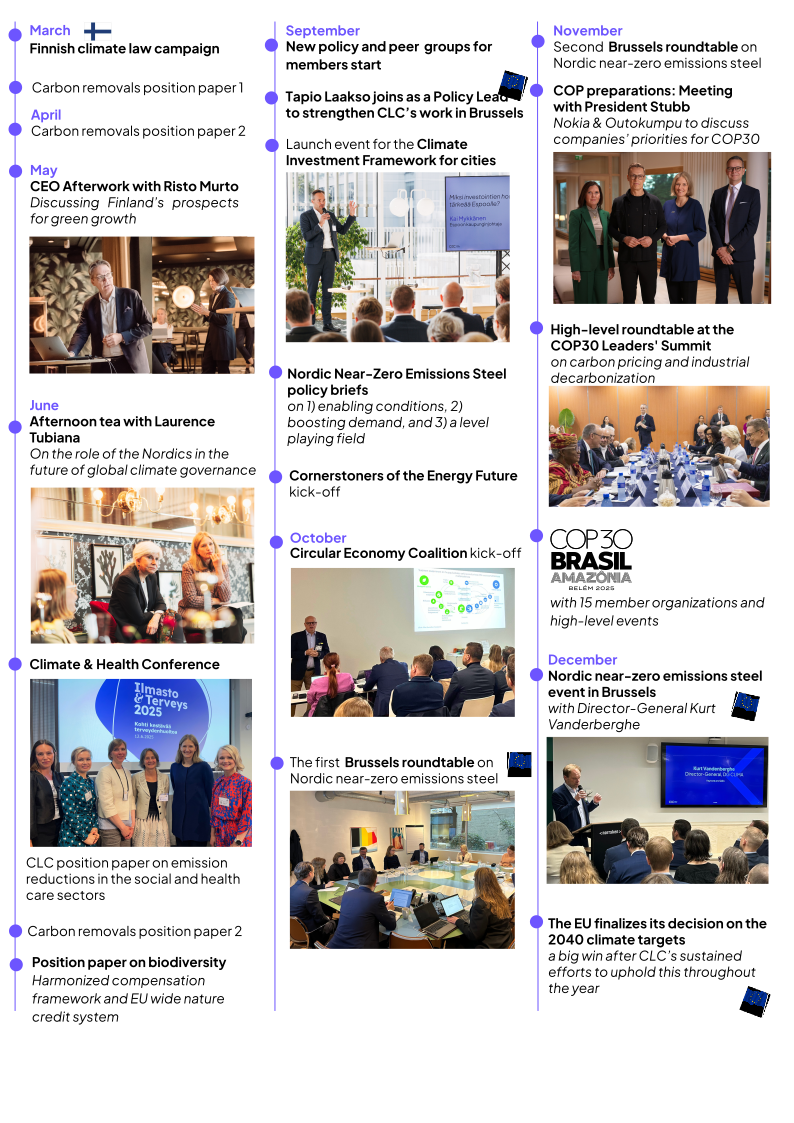
In 2025, the world moved deeper into climate instability, and even those of us who follow the science closely felt a new kind of anxiety. The year became the second warmest ever recorded. Droughts, wildfires, and water shortages made one thing unmistakably clear: climate risk is no longer a distant forecast. It is the operating environment in which we live and work.
Another deeply concerning development came from the United States, where emissions rose by 2.4 percent, breaking the long-standing trend of decoupling emissions from economic growth, even before the new Trump administration’s policies fully took effect. For businesses operating across the Atlantic, this marked the beginning of a period of heightened policy divergence and increased uncertainty heading into 2026.
Against this backdrop of accelerating crises, the Climate Leadership Coalition community stood together with clarity, determination, and a mindset that combines ambition with realism. By the end of the year, our network consisted of 95 members, united by a shared conviction: finding solutions to the climate crisis is not optional—it is the only viable path forward. At the same time, it represents one of the most important growth opportunities for Europe. The climate challenge must and can be solved while building a more resilient, competitive Europe with new sources of sustainablegrowth.
Globally, there were also encouraging signs from the energy transition. More than 90 percent of new global power capacity came from renewable sources, providing clear evidence of momentum. Yet fossil fuel production continued to expand, driven by geopolitical realpolitik. As a result, the world is increasingly divided between electrostates, which build prosperity through clean electricity and advanced industrial capabilities, and petrostates, which continue to defend fossil-based economic structures. This divide will shape 2026 and the decade ahead. The Nordic countries sit firmly and proudly among the electrostates, and the stakes in this competition are strategic as much as environmental.
Throughout 2025, CLC focused on what matters most: turning climate ambition into real-world competitiveness. Nordic companies need stable market signals, functioning carbon markets, efficient permitting processes, and EU policies that reward clean investment rather than punish first movers. Together with our members, we consistently advanced these priorities within the European Commission, the European Parliament, and the Council.
We also grew stronger as a coalition. We welcomed PwC, Capgemini, and Atria as new members, broadening our reach, deepening our expertise, and strengthening our capabilities across finance, digitalisation, and sustainable value chains. Our influence grows because our community grows.
In 2025, we further strengthened our presence in Brussels by bringing on a colleague fully dedicated to EU-level engagement. We also made significant investments in strategic initiatives. As defined in our 2024 strategy, we began developing targeted initiatives in key industrial sectors. This work started with carbon removals and near-zero-emissions steel—both of which achieved tangible impact on European policy discussions and investment frameworks, including support for cities as hosts of much-needed industrial investments. At the same time, we laid the groundwork for new initiatives in food and agriculture, as well as biodiversity. You will hear more about these in 2026.
As we step into 2026, one thing is painfully clear—and also energising: the world needs Nordic climate leadership more than ever.
We know how to combine electrification, industrial transformation, and nature-positive solutions into a strategy that strengthens the economy while safeguarding the planet. We also know that predictable, market-based climate policies are not only climate tools—they are competitiveness tools.
This is the moment for companies and policymakers to act with courage and clarity. And at CLC, we will be right there with our members—pushing, advising, convening, and enabling—so that together we can turn this turbulent decade into one of decisive progress.
Tuuli Kaskinen,
CEO, Climate Leadership Coalition
2. Strategy and value proposal
2.1 Strategy
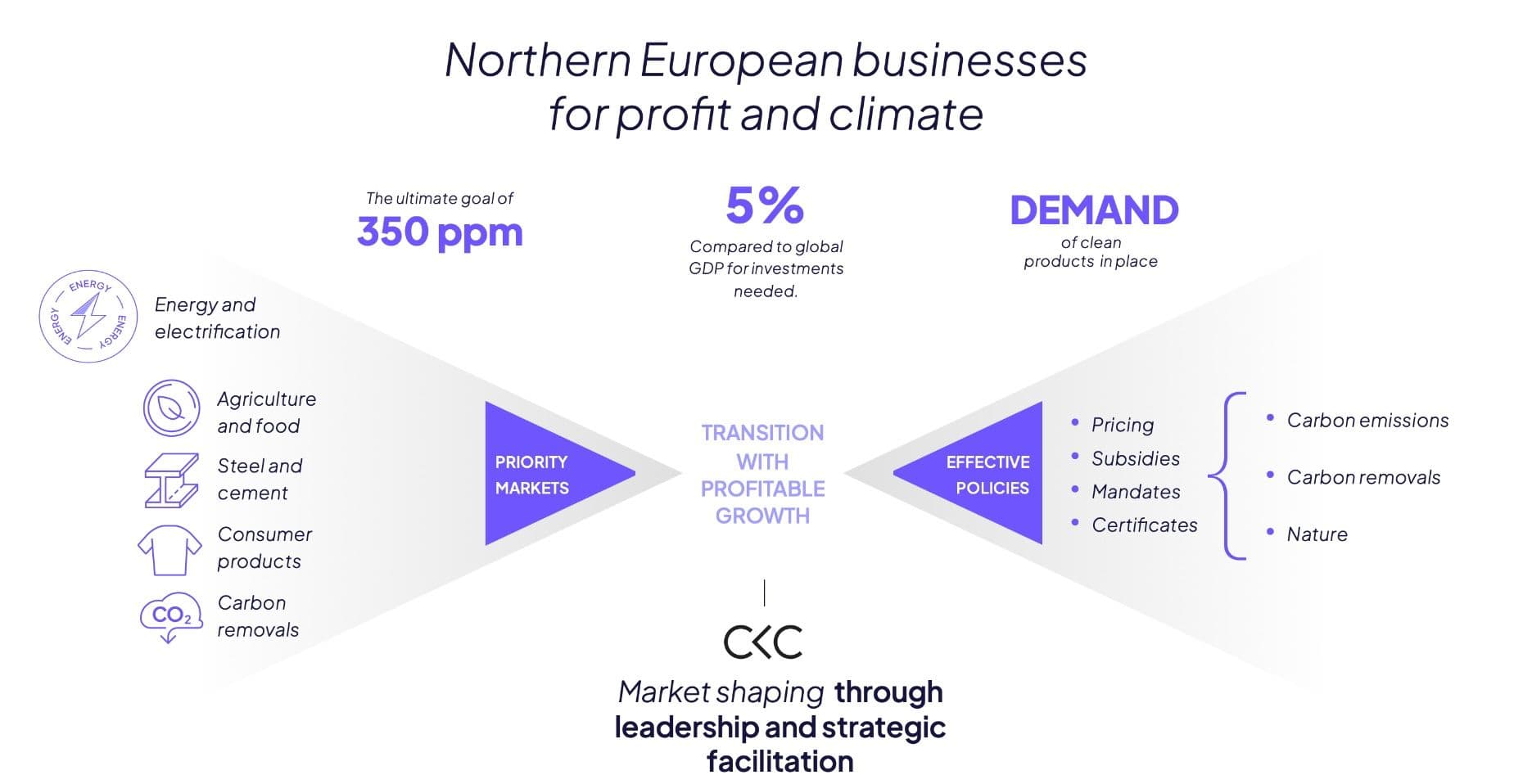
To limit the Earth's atmosphere's carbon dioxide concentration to 350 ppm and stay within planetary boundaries, the global economy must mobilize 5% of GDP annually in climate and nature-positive investments. This transformation is not only necessary but also economically viable as boosting demand for green products offers significant opportunities for Northern European businesses to lead in sustainable innovation and competitiveness.
In our work we target strategic sectors where climate action can unlock the most transformative change: steel and cement, carbon removals, consumer products, and agriculture and food. At the foundation lies energy, the critical enabler of decarbonization across all sectors.
2.2 Value proposal
By joining CLC, organizations gain access to a results-driven coalition of leaders, actionable insights, science-based data, and a platform to shape policies that enable a profitable transition to a sustainable future.
- Drive market transformation: Have a concrete impact on Nordic-, EU- and global climate policies to secure a competitive advantage for sustainable solutions.
- Engage with prominent business executives: Get access to an exclusive network of climate leaders from diverse industries to share, learn, and co-create towards a sustainable economy.
- Access science-based data and strategic insights through strategic initiatives: Tap into actionable policy insights and curated, science-based data on key drivers and impacts – helping you and your organization capture the next opportunity.
- Position as part of a leading climate-business coalition: Demonstrate your ambition and commitment to driving the green transition by aligning with a well-recognized, high-impact leadership coalition.
3. CLC members
At the end of 2025, CLC had 96 organisational members and 67 personal members. In 2025, we were pleased to welcome three new organisational members: PwC, Capgemini and Atria.
CLC’s organizational members come from five Northern European countries (Finland, Sweden, Denmark, Estonia and the Netherlands) and represent a wide range of different sectors from energy and construction to consumer products and health care. Most members are businesses, but the network also includes universities and research institutions, forerunner Nordic cities and foundations.
4. Member engagement
CLC updated its member activities in 2025. The 11 theme groups launched in 2024 which had been planned to run for 1.5 years were wrapped up as scheduled in June 2025. In fall, CLC’s new groups started their work.
4.1 Theme groups spring 2025
Theme groups had an active spring and most of them hosted one to two meetings before finalizing their work in June 2025.
- The sustainable forestry theme group met two times, focusing on carbon emission management in the forest industry, emission-free pulping innovations, and the EU bioeconomy strategy consultation. The group was led by Ali Harlin (VTT).
- Climate and health theme group’s work during spring 2025 focused on organizing the first ever climate & health conference in Finland, which took place in June. The group also prepared a policy proposal Firm actions needed to promote emission reduction and sustainability within social and health care sector.
- Carbon footprint and handprint theme group convened twice during the spring, discussing political insights on the Omnibus proposal and its impact on climate sustainability, corporate experiences with emission reporting, forest-related carbon accounting, simplification of greenhouse gas reporting frameworks, and legal aspects of climate transition plans. The leaders of the group were Sari Siitonen and Tiina Pajula (Afry).
- Finance and economy theme group met twice during the spring. Discussions focused on climate-related financial risk and the EU Omnibus package. The group’s work was led by Timo Tyrväinen.
- Smart and clean mobility theme group, Zero-carbon energy systems and Happy future of food groups finalized their work already in 2024.
4.2 New groups in fall 2025
EU policy group
The EU Policy Group focuses on both current EU initiatives and longer-term policy needs. EU climate and industrial policy play a central role in shaping growth opportunities for Nordic businesses. The group meets four times a year, with work continuing between meetings via email and smaller group interactions. In the meetings, members stay informed about key EU policy developments, shape the agenda of CLC’s policy work, and contribute to CLC’s positions and proposals on EU initiatives.
The group met twice during the fall. The October meeting focused on a policy outlook for EU’s near-term climate policy. In addition to CLC’s Juha Turkki and Tapio Laakso, Ismo Ulvila from European Commission Representation in Finland shared his perspective on the topic. The second meeting in December took place just after the European Parliament had reached a decision on the EU 2040 climate target. The meeting included a timely analysis on the decision by Teppo Säkkinen from Technology Industries Finland. The meeting also discussed the opportunities of Article 6 credits based on a presentation by Pasi Rinne from the Nordic Initiatives for Cooperative Approaches (NICA).
Global policy group
The global policy group engages with international climate policy, including UNFCCC COPs, global carbon pricing, and carbon removal markets. It meets three to four times a year and is designed for professionals involved in global climate strategy and international events.
FI policy group
The national policy group concentrates on Finnish climate policy, with a strategic focus on the upcoming 2027 parliamentary elections. It meets twice a year and communicates via email between the meetings as needed. Members will help shape CLC’s national advocacy strategy. This group is best suited for PA/PR leads focused on Finland. The group was scheduled to have their first meeting in spring 2026.
Strategy leaders' group
This peer group is a continuation of the strategy leaders' theme group and explores how to integrate climate into corporate strategy. The group meets three times per year online and is organised and facilitated in collaboration with Combient Pure. The group met once fall 2025 to discuss Valio’s strategy and climate work.
Sustainability leaders' group
This peer group is for sustainability leaders in decision-making positions in large Finnish companies. The group focuses on peer learning and shared challenges around various sustainability issues. The group was scheduled to have their first meeting in spring 2026.
Finance & economy webinar
This webinar builds on the work of the former Finance and Economy theme group. Led by Jukka Honkamäki, CLC’s Senior Advisor on Sustainable Finance, it convened once during the fall. The session focused on the implications of scaling back ESG reporting requirements and what this means for companies’ green transition. In his keynote, Jussi Nokkala (Partner, Sustainability Advisory Leader, PwC Finland) examined what are the trends he sees in companies while Hanna Silvola (Associate Professor, Hanken School of Economics) offered a complementary academic perspective.
5. Policy work
5.1 Policy focuses of the year
The EU 2040 target
Throughout the year, CLC worked actively to uphold the EU –90% by 2040 climate goal. The agreement was finally reached at the end of the year. While the final decision included some flexibilities and concessions, such as the use of international carbon credits and the decision to postpone ETS2, which were not optimal, it is important that the EU was able to make this decision for long-term policy predictability and strong climate commitment.
Finnish climate law
In the spring, CLC launched a high-profile campaign to prevent any weakening of Finland’s Climate Act. We mobilized leading companies to publicly support the law and emphasize its strategic importance for Finland’s economy and global positioning. Across Finnish media, CLC and its members emphasized that the Climate Act is a growth measure as it accelerates green exports, creates predictability that international investors value, and strengthens Finland's country image.
COP30
One of the highlights of the year was the annual UN Climate Conference, this year held in Belém, Brazil. CLC was on site to support the 15 attending member organizations and to advance our strategic goals. CLC hosted three side events, and our staff participated in several member-organized and external events as moderators and panelists.
Even amid challenging geopolitical circumstances, COP30 became the second-largest COP ever. Despite weak formal outcomes, COP30 saw increasing global momentum around key issues from carbon pricing to fossil fuel phase out. CLC actively supported the global push for a fossil fuel phase-out roadmap during COP30 in Belém. Partnering up with We Mean Business Coalition, we amplified the Statement for a Fossil Fuel Roadmap, which gathered over 100 company and organization signatories.
Call on Carbon
The Call was updated following the finalization of the UNFCCC’s Article 6 rule, one of its original objectives. It was also expanded to explicitly include carbon removals, reflecting their growing role in achieving net-negative emissions. Throughout the year, CLC continued its long-standing collaboration with key international institutions, including the WTO, IMF, and ICC. This work culminated in a high-level roundtable held during the COP30 Leaders’ Summit in November.
Biodiversity and nature credits
On June 26th, CLC published a position paper calling for a harmonized Nordic compensation framework and the development of an EU-wide nature credit system. At the 2025 Nature Forum, CLC co-hosted a session exploring how nature value markets and ecological compensation can support municipalities and urban regions, fostering collaboration between local governments and businesses. CLC also hosted a technical session at the Business & Nature Summit 2025, highlighting how biodiversity finance, compensation schemes, and credit markets can accelerate nature recovery, featuring insights from leading experts including Leif Schulman (Director General of the Finnish Environment Institute), Bettina Doeser (European Commission), and Barbara Sanderson (TNFD).
5.2 Strategic initiatives
CLC’s strategic initiatives are deep-dive initiatives that bring together members around the most critical climate focus areas. These projects are not just working groups; they are collaborative platforms where members co-create policy proposals, share expertise, and shape the future of climate action.
Each project is designed to deliver tangible outcomes, such as reports and recommendations, which are shared with the broader member base through webinars and events. These projects are open to active participation and provide a unique opportunity to contribute directly to CLC’s strategic agenda.
Carbon removals
As part of the strategic initiative on Carbon Dioxide Removal (CDR), CLC published three policy briefs emphasizing the need to 1) integrate removals into the EU Emissions Trading System (EU ETS), 2) develop a policy roadmap for scaling novel CDR in the EU to achieve net-negative emissions and 3) to unlock carbon capture & utilization potential through stronger policies in the EU. While emission reductions remain essential, sectors such as steel, cement, and aviation will continue to produce residual emissions, making CDR crucial for achieving both net-zero and net-negative targets. The papers outline pathways for Europe to lead in scaling technologies like BECCS, biochar, and DACCS1, and propose incentives and regulatory frameworks to accelerate deployment and cost reduction and thereby position Europe at the forefront of global carbon removal and utilization efforts.
The project’s background analysis was largely based on three external consultancy studies. We also organized a roundtable discussion with consultants, CLC members, and key civil servants and hosted a webinar to all CLC members. The project was funded by the TT Foundation, and it ended in November 2025.
Climate investments in cities
As part of CLC’s strategic work on climate investments, we co-developed a Climate Investment Framework for Cities together with the City of Espoo and Sweco Finland. Built through two workshops and a webinar, complemented by interviews and sectoral group discussions with Espoo’s climate partners and CLC members, from companies and research institutions to public utilities and regional decision-makers, the framework translates municipal ambition into investable, scalable action. It highlights the practical barriers companies face when deciding and scaling investments and provides a Nordic blueprint for city leaders to prioritize measures that increase investor certainty and foster innovation and collaboration.
The framework responds to Europe’s investment gap under the Green Deal, over €520 billion in additional annual climate investment, and offers actionable strategies that align city planning with investor expectations, remove administrative bottlenecks, and enable innovative financing.
An accompanying regional economic impact study, co-developed by CLC and Espoo together with Caruna, Fingrid, Fortum and Sweco, shows that clean-energy investments can generate vast amounts of jobs and significant tax revenue while supporting climate-neutrality goals, demonstrating how infrastructure, permitting, and ecosystem development can deliver benefits that go well beyond emission reductions.
Engagement with the framework has been European in scope. The framework was presented at the Cities Mission Conference 2025 in Lithuania in May, at the Committee of the Regions in Brussels in the end of August, officially launched in Espoo on 4 September 2025, and highlighted at COP30 in Belém in the event “Linking thriving cities, clean investments and climate action” in November.
Near-zero emissions steel
CLC, together with Demos Helsinki and We Mean Business Coalition, launched the Nordic Near-Zero Emissions Steel initiative to accelerate decarbonization in one of the most carbon- intensive sectors. The project brought together companies across the value chain and created a space for collaboration with the whole ecosystem to identify policy barriers, coordinate public- private action, and align EU-level advocacy.
With Finland and Sweden already pioneering low carbon steelmaking, this initiative promotes ambitious climate policy, level playing field, enabling conditions and creation of lead markets necessary for scaling up near-zero emissions steelmaking in Europe. The aim is to strengthen competitiveness, drive demand through robust standards, and position the Nordics as a global leader in green industrial transformation.
Within the initiative we produced three policy briefs and one background report and organised several workshops with the participating companies. We hosted two roundtables and one seminar around this initiative in Brussels. We also briefed MEPs, their advisors, and commission officials. The initiative is funded by the TAH Foundation and the European Climate Foundation. The near-zero emissions steel initiative will continue until April 2026 with planning for the second phase underway.
Circular Economy Coalition
The Circular Economy Coalition is a new strategic collaboration uniting leading companies, researchers, and policymakers across industrial value chains in Finland and the Nordics. The group aims to address a set of persistent structural barriers to progress in circular economy. The Coalition's goal is to strategically accelerate the region's shift toward advanced circular business models and establish Finland as a global forerunner, successfully turning resource challenges into new opportunities for economic prosperity and resilience. Confirmed members of the Coalition are Finnfoam, Betolar, NRC Group, NG Nordic, Sumi Oy, Neste, Remeo, and L&T.
After a successful kick-off meeting with strong participation in October, a workshop in early December paved the way for the future of the Coalition’s work by bringing coalition members together and mapping the coalition’s information and research needs with VTT and LUT.
Cornerstones of the energy future
Cornerstones of the energy future is a strategic initiative designed to strengthen Finland’s knowledge base and foresight capabilities for the clean energy transition. The project aims to define the scope of possibilities for Finland's climate and energy future for the upcoming decades. Based on the analysis of Finland’s energy sector’s global drivers and technological and natural realities, the core mission is to develop an open science-based data model which can provide support for public and private sector decision-making in planning its investments in the energy sector. Therefore, the project responds to the lack of long-term outlook for the future which currently limits investment in the Finnish energy sector. The project is funded by The Finnish Centre for the Promotion of Electrical Engineering and Energy Efficiency (STEK). The planned timespan for the project extends from 2025 to 2027.
5.3 Policy statements and briefs
As in previous years, policy proposals and statements were one of CLC’s key tools for shaping Nordic, EU and global climate policy and a core pillar of CLC’s strategic impact. In 2025, CLC produced an exceptionally large number of policy proposals, briefs and statements, 20 altogether. All statements were made publicly available on the CLC website.
Policy briefs
Carbon removals
- Carbon dioxide removals integration into EU Emission Trading System
- A policy roadmap for scaling up novel CDR in the EU to achieve net-negative emissions
- Role of CCU based materials and products as CDR
Near-zero emissions steel
- Creating the enabling conditions for near-zero emission steelmaking in Europe
- Boosting demand: Creating lead markets for near-zero emission steel in the EU
- Protecting a level playing field in climate policy through the rapid and effectiveimplementation of the Carbon Border Adjustment Mechanism
Biodiversity
Climate & Health
Policy statements and comments to the European Commission
- CLC’s statement on the EU Commission’s Circular Economy Act
- CLC statement on the EU Commission’s Electrification Action Plan
- CLC’s statement on the European Commission’s Roadmap towards Nature Credits
- CLC's comment on EU strategy to boost global climate and energy transition
- CLC's comment summary: European Commission’s consultation on Industrial Decarbonisation Accelerator Act
- CLC's comment summary: European Commission’s consultation on ETS review
Statements to the Finnish parliament
- CLC statement on the EU's Multiannual Financial Framework (MFF) for 2028–2034
- CLC's statement on the European Commission's implementing regulation on the calculation methodology for product-specific emissions under the carbon borderadjustment mechanism
- CLC statements on Finland’s draft national energy and climate strategy and medium-term climate plan
- CLC’s statement on Finnish government’s draft regulation for promoting industrial biogenic CO2 capture
- Statement to the Environment Committee of the Finnish Parliament on Industrial Policy
- Statement to the Environment Committee of the Finnish Parliament on government report regarding commission's communication on Clean Industrial Deal
6. Key events
Throughout the year, CLC-organised events provided high‑impact platforms for member engagement, policy advocacy, and visibility. CLC events amplify CLC’s role as a facilitator between business leaders, policymakers, and international institutions. This year, our presence in the EU was brought to another level with several events hosted in Brussels. These events play a crucial role in facilitating direct dialogue with the European Commission, Parliament, and Permanent Representations.
Roundtable on opportunities for Finnish businesses within the new Article 6 carbon market mechanism
On January 9, CLC hosted a roundtable together with Nefco, The Nordic Green Bank, and ICC Finland to explore the opportunities presented by the newly operationalised carbon market mechanism under Article 6 of the Paris Agreement. The event, which brought together industry leaders, policymakers and experts, demonstrated strong interest in Article 6 mechanisms and shared commitment to climate targets. The event was opened by the retreating Minister of Climate and the Environment Kai Mykkänen.
CEO Afterwork with Risto Murto
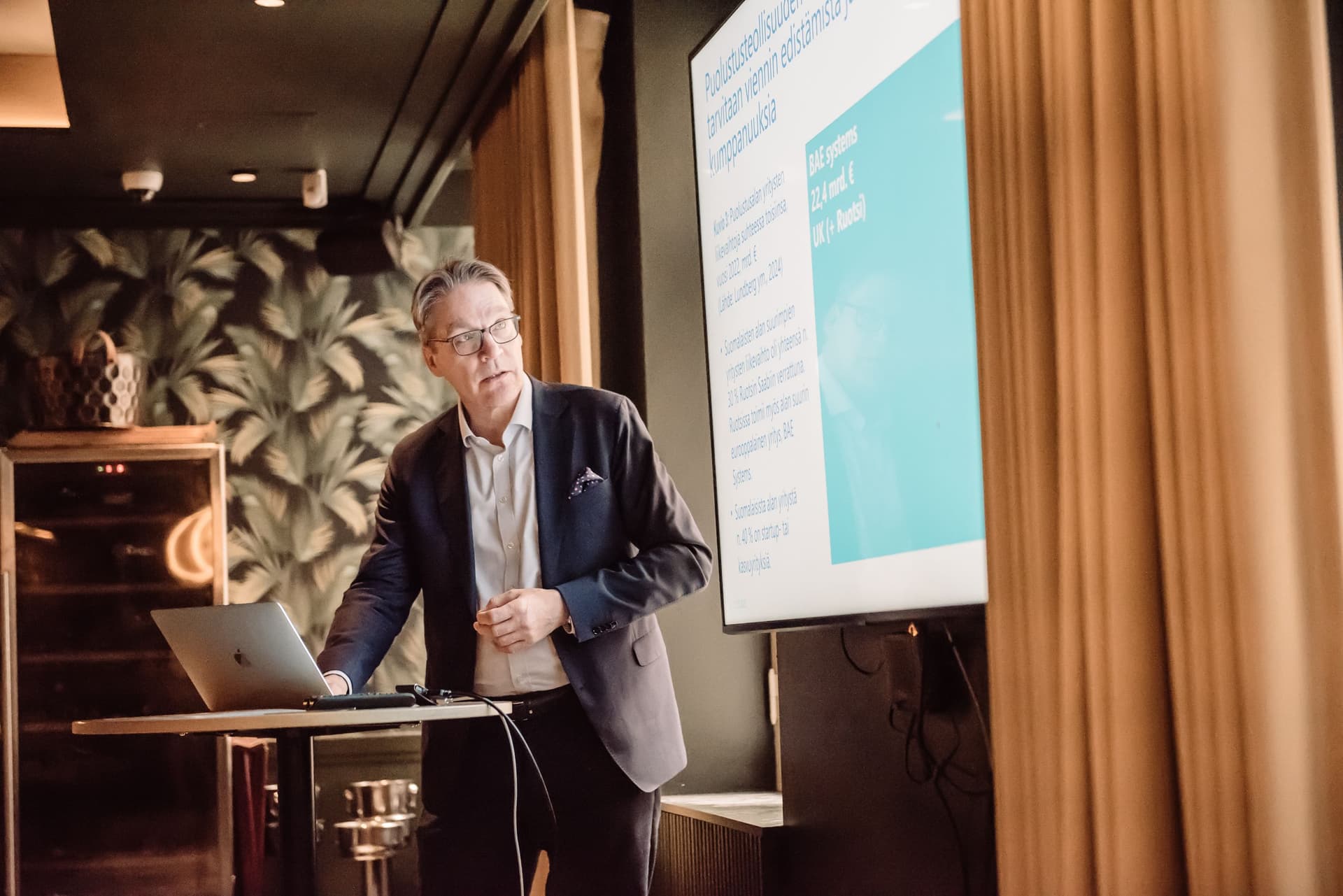
On May 12, CLC hosted a CEO afterwork with Risto Murto, CEO of Varma and leader of Kasvuriihi work group (the Room for Growth project). Murto emphasized that Finland is a global leader in sustainable policy and that major investors in the country have long been ahead in this field. He highlighted the findings of the government’s Kasvuriihi initiative, noting that economic growth in Finland requires renewal and growth within the business sector, with a particular focus on clean transition and innovation. 24 CEOs and member executives participated.
Afternoon tea with Laurence Tubiana
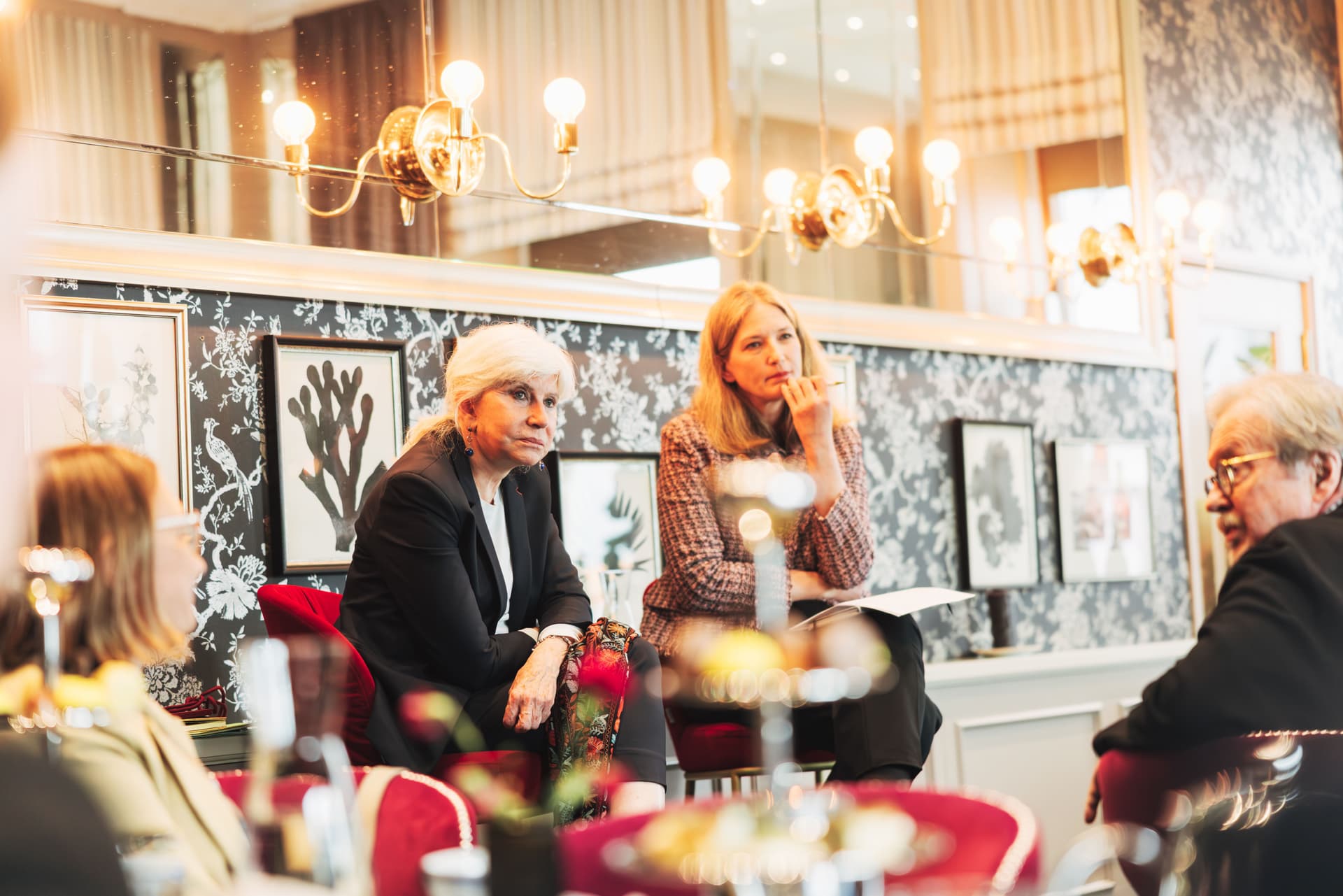
On June 3, Laurence Tubiana, the architect of the Paris Agreement and CEO of the European Climate Foundation, visited Finland to exchange views on COP30, future climate governance and the role of the Nordics. Her visit sparked dialogue on how Nordic climate leadership, grounded in collaboration and stronger real-economy foundation, can shape the road to COP30 and beyond. 23 CLC members and Tubiana’s team attended the event. In addition, CLC organised a dinner for 10 CLC representatives of the financial sector in the company of Laurence Tubiana.
Climate and Health Conference
On June 12 CLC organized Finland’s first national Climate & Health Congress in collaboration with the Finnish Institute for Health and Welfare (THL), Terveystalo, and Mehiläinen. The event gathered leading researchers, healthcare experts, and innovators to examine the climate impact of Finland’s social and healthcare system and explore sustainable practices in the sector. Highlights included a keynote by Sonia Roschnik from the Geneva Sustainability Centre, practical examples from hospitals and service providers, and the launch of CLC’s new position paper outlining cost-effective climate actions for healthcare. The congress marked an important step toward climate-smart healthcare in Finland and gathered a total of 260 participants and speakers in person and online.
Launch event for the Climate Investment Framework for cities
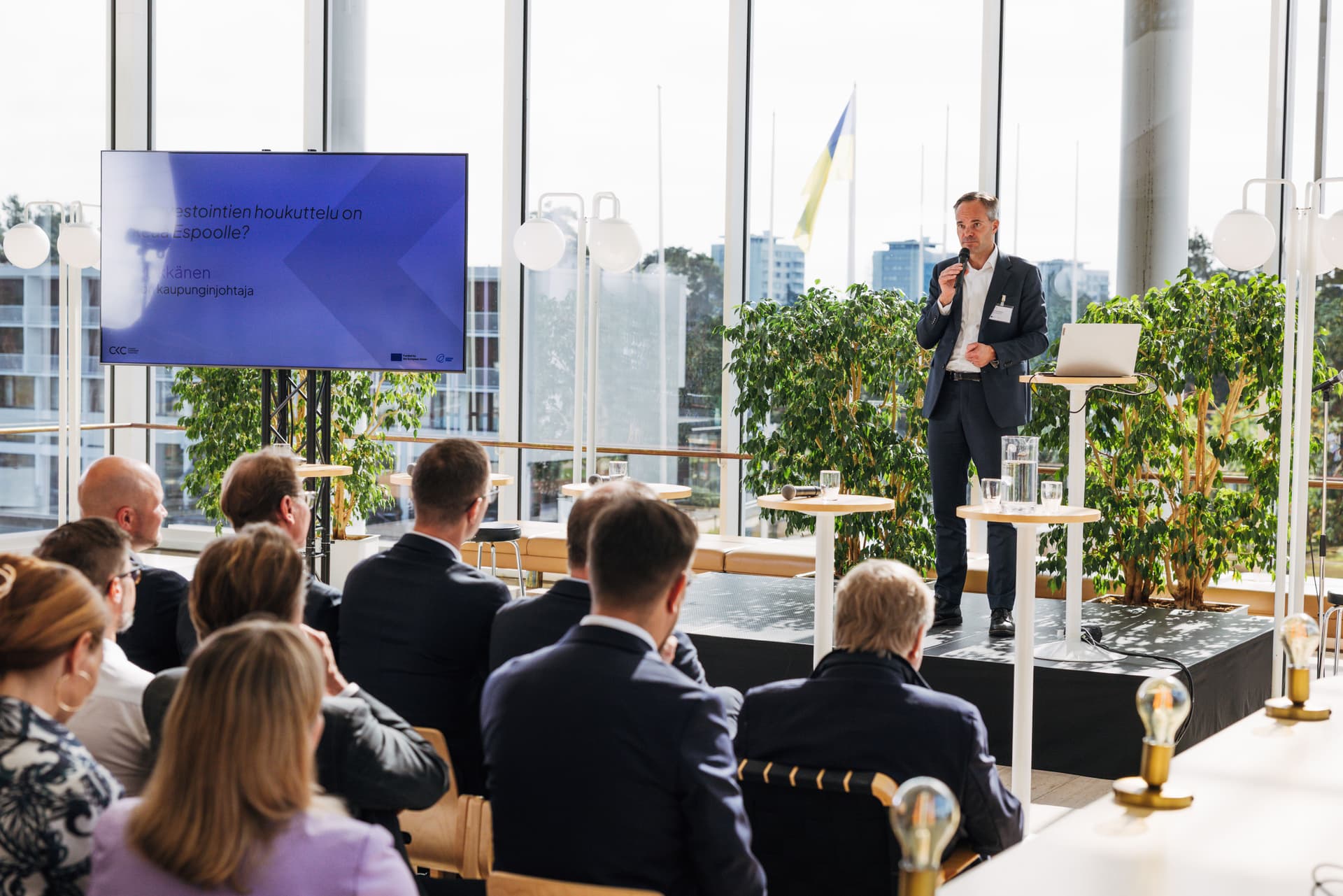
On September 4 Climate Leadership Coalition organized a high-level Investment framework for cities event in Espoo to launch the new Climate Investment Framework, co-developed with the City of Espoo. The event brought together city leaders, business executives, researchers, and policymakers to discuss how municipalities can scale up green investments and lead Europe’s climate transition. Alongside the framework, CLC presented a Regional Energy Impact Study developed with Caruna, Fingrid, Fortum, and Sweco. Key speakers included Finland’s Minister of Local and Regional Governance Anna-Kaisa Ikonen, Kai Mykkänen; mayor of Espoo, Lauri Inna, Mayor of Pori; Tomas Häyry, Mayor of Vaasa; and Jyrki Tammivuori, CEO of Caruna The discussions highlighted practical steps for cities to unlock private climate finance and accelerate the green transition. A total of 89 municipal representatives, company representatives, researchers, decisionmakers, journalists, and project partners participated in the event.
Energy project kick-off
On September 29 the “Cornerstones of Finland’s Energy Future” initiative was launched in a kick- off event at Sitra in Helsinki. The event featured opening remarks by Ville Voipio, Professor of Practice and Chairman of the Board at Vaisala, and Markku Kulmala, Academician and Director of the ACCC Flagship at the University of Helsinki. A panel discussion brought together leading experts: Tiina Koljonen, Principal Scientist at VTT; Mika Anttonen, Chair of the Board at St1; Mika Järvinen, Professor at Aalto University; and Mikko Heikkilä, Head of Public Affairs at Fingrid. The event gathered 37 participants in person and online.
Circular economy coalition kick-off meeting
On October 7 CLC convened the kick-off for the Circular Economy Coalition at VTT in Espoo, bringing together leading companies across the plastics value chain, researchers, and innovators to explore how circularity can become a competitive advantage. The event was led by Iida Miettinen, Ali Harlin (VTT), Pertti Korhonen, and CLC’s Tuuli Kaskinen. Speakers addressed Finland’s strong technological capabilities and clean energy systems, as well as the challenges of scaling circular solutions due to weak incentives and unpredictable policy signals. Discussions focused on building a joint roadmap to remove bottlenecks, align incentives, and accelerate industrial uptake of circular models. The event gathered 45 participants.
Preparations for COP30: meeting with President Alexander Stubb
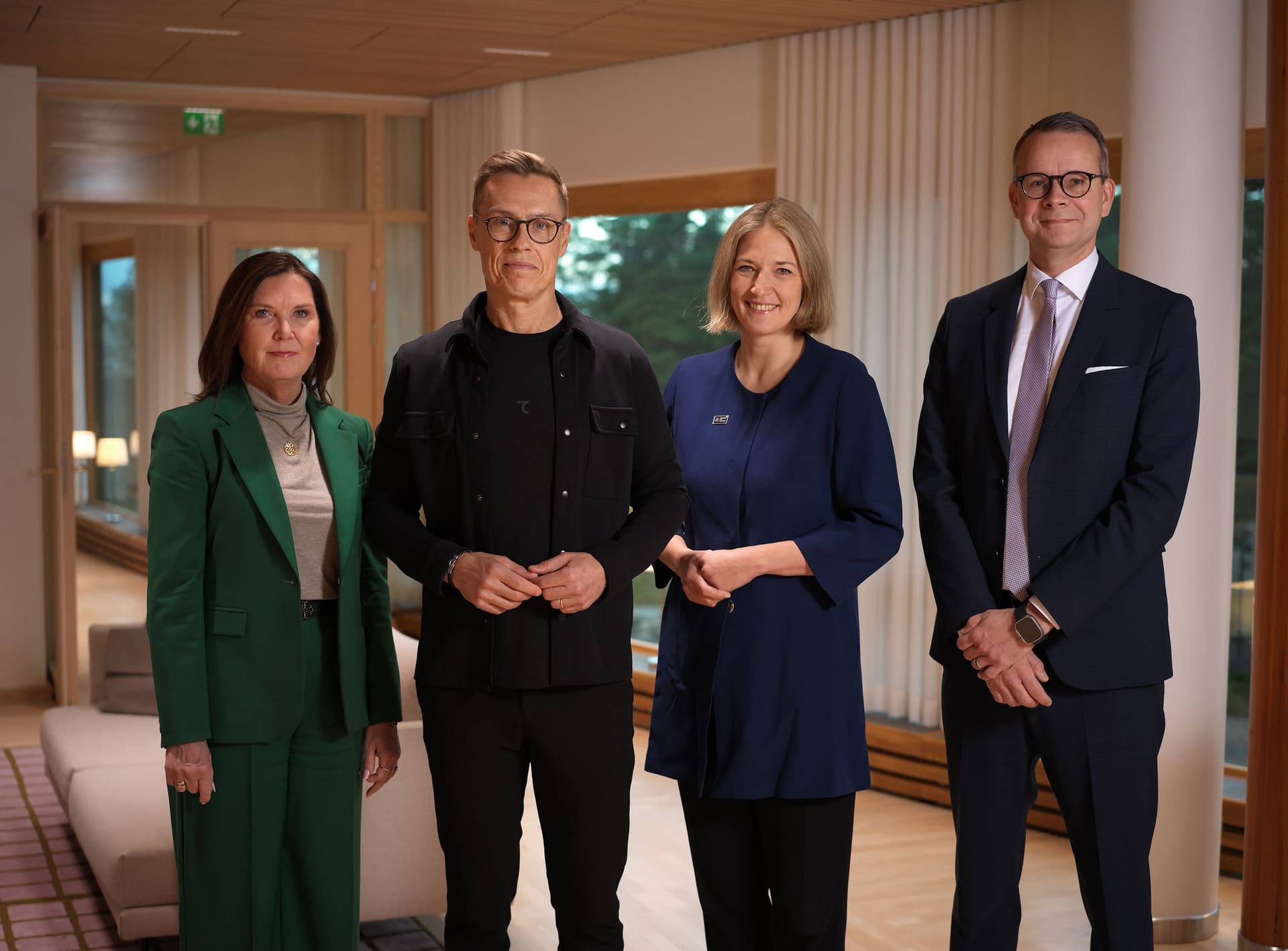
In November, CLC’s CEO Tuuli Kaskinen met President Alexander Stubb with Outokumpu’s CEO Kati ter Horst and Nokia’s Chief Legal Officer Esa Niinimäki to discuss Finnish companies’ preparations for COP30 in Belém, emphasizing that frontrunner businesses are strengthening commitments despite headwinds, that coalitions of the willing and practical initiatives can complement formal negotiations, that Nordic leaders like Outokumpu and Nokia are advancing from low‑carbon steel to energy‑efficient digital solutions, and that private investment will drive the transition if supported by clear, predictable climate policy.
High-level roundtable at the COP30 Leaders' Summit: Driving industrial decarbonization with like-minded partners: Sectoral roadmaps and carbon pricing
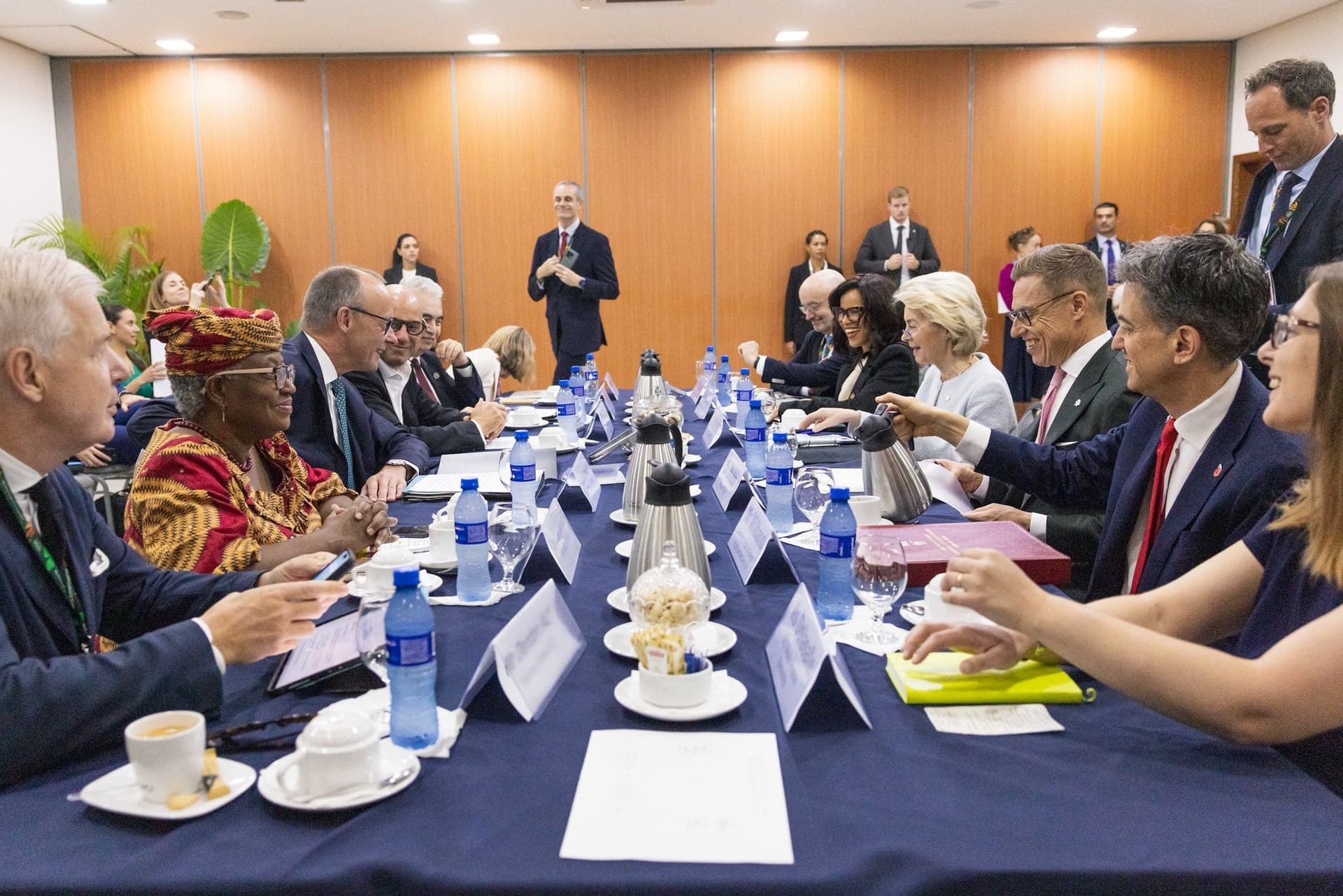
CLC supported the convening of world leaders for a roundtable discussion in Belém, focused on the clean industrial transition with carbon pricing at its core. The roundtable included Chancellor Friedrich Merz, President Alexander Stubb, President of the European Commission Ursula von der Leyen as well as CLC’s long-term key partners WTO Director-General Dr. Ngozi Okonjo-Iweala, Secretary General of the ICC John W.H. Denton AO, and many others. The discussion highlighted aligned carbon pricing mechanisms, the establishment of trusted standards and the importance of sectoral roadmaps for investment mobilization.
Official UNFCCC Side Event: Who Takes the Global Leadership in Near-Zero Emissions Steel Ecosystem?
On November 19, CLC co-hosted an official UNFCCC side event at COP30 together with Future Cleantech Architects (Germany). The event focused on industrial decarbonization and near-zero emissions steel. The key message from the event was that decarbonizing hard-to-abate sectors depends largely on the availability of clean energy and green hydrogen. Simultaneously, global cooperation in both multilateral and bilateral forums is essential, and stable and long-term climate policy commitments will be key to unlocking investments. Speakers at the event included Sari Multala, Minister for Climate and the Environment of Finland and Maria Netto, Executive Director of Brazilian Institute for Climate and Society.
Brussels Nordic near-zero emissions steel roundtables
As part of CLC’s strengthened presence in Brussels, we hosted two roundtables in Brussels together with the newly established Nordic Near-Zero Emissions Steel Group. The first roundtable on October 1st focused on protecting a level playing field. CLC brought together a selected group of 14 policymakers, industry leaders, and experts to explore how the EU can ensure effective Carbon Border Adjustment Mechanism implementation to safeguard competitiveness, prevent carbon leakage, and accelerate the transition to near-zero emissions steel. On November 4th the second roundtable focused on creating the enabling conditions for near-zero emissions steelmaking in Europe. Discussion touched issues like clean power and hydrogen production, financing and permitting. 16 people participated the discussion.
Near-Zero emissions steel: Nordic perspectives on Europe’s clean transition
On December 4th, CLC hosted a high-level event in Brussels. The event brought together companies across the steel value chain in the Nordics, including SSAB, Stegra, and Outokumpu, to engage with policymakers in driving the competitive transformation of the sector and addressing investment barriers. The event was opened with remarks by Director-General Kurt Vandenberghe (DG CLIMA), followed by a panel discussion and showcasing steel transition beyond steelmaking companies with Metso, YIT and Fortum. The event gathered 50 participants and speakers.
CLC Spring and Fall meetings
CLC held its annual meetings in a hybrid format at Itämerenkatu 11–13 and online in May and November. The spring meeting featured a keynote by Hiski Haukkala, Director of the Finnish Institute of Foreign Affairs, who explored how to navigate today’s landscape of nationalism and mercantilism. At the fall meeting, Henrietta Moon, Founder and CEO of Carboculture, highlighted the role of Carboculture’s technology in emerging carbon removal markets, alongside reflections from Pauli Aalto-Setälä, Member of Parliament and Chair of the Parliamentary Climate Policy Review Committee, Sari Baldauf, and Ville Voipio whom the meeting elected as the new chair of the board. The fall meeting gathered 35 and 48 participants in person and online.
7. Organisation
7.1 People
CLC Board
The composition of CLC’s Board was as follows until the Annual Autumn Meeting of 2025:
- Sari Baldauf (Chair)
- Olli Sirkka (vice-chair)
- Tiina Alahuhta-Kasko
- Pekka Ala-Pietilä
- Merja Kivelä
- Mikael Rauterkus
- Heikki Vuorenmaa
- Ville Voipio
- Tomas HäyryDeputy members:
- Henna Hakkarainen
- Peep Siitam
- Åsa Jackson
Secretary (non-board member):
- Lena Höglund
Staff
- Tuuli Kaskinen, Chief Executive Officer
- Juha Turkki, Development Director, Systemic Climate Solutions
- Tapio Laakso, Policy Lead, 1/9/2025 -
- Anna-Leena Raij, Communications and Community Lead
- Senni Raunio, Specialist, Member Relations and Project Development -31/12/2025
- Minttu Liuhto, Specialist, Agriculture and Food, on parental leave
- Lena Höglund, Office Coordinator
- Tatu Kähärä, Junior Specialist (COP29 and COMET project intern), 2/9/2024-31/5/2025
- Maaria Ronkainen, Junior Specialist (communications and climate policy) 13/10/2025- 12/4/2026
- Iida Miettinen, Interim Project Lead (Circular Economy Coalition) 1/11/2025 - 31/3/2026
Advisors
- Timo Tyrväinen -30/9/2025
- Sari Siitonen
- Jukka Honkaniemi 1/10/2025-
7.2 Financial review
CLC’s operations were primarily financed through membership fees. Income from membership fees amounted to EUR 902,580 in 2025. Income from grants to EUR 288,969.80 (167,224.86) and income from other sources to EUR 3,675.80 (6,809.40). CLC’s expenses totalled EUR 1,147,290.28 (1,038,074.51). The financial result for 2025 was EUR 45,633.84 (67,247.24). CLC’s equity when books were closed stood at EUR 387,848.75 (342,214.91). CLC’s income and expenses in 2025 were estimated at EUR 1,154,887.00 as per the autumn meeting of 2024.The fall meeting confirmed the action plan, budget and fees for the upcoming calendar year. CLC charges no joining fees from new members. Membership fees have remained unchanged since the beginning of 2024, but members are invited to participate in strategic project partnerships.
- EUR 11,000.00 for large organisations (net sales of MEUR 50 or more)
- EUR 5,500.00 for small organisations (net sales of less than MEUR 50)
- EUR 5,500.00 for small associations (with fewer than 20 persons)
- EUR 2,500.00 for foundations and start-ups
- No membership fee collected from individual members
7.3 Internal administration
The CLC board met seven times in 2025.
CLC held two general meetings in 2025. The spring meeting was held on the 13th of May 2025 and the autumn meeting on the 4th of November 2025. The autumn meeting included the election of the chair and the election of eight members and five deputy members to the Board. The new chair is Ville Voipio (2023-2025, 2025-2027); the members are Olli Sirkka (2024-2026), Sari Baldauf (2023-2025, 2025-2026), Pekka Ala-Pietilä (2023-2025, 2025-2026), Merja Kivelä (2024-2026), Tiina Alahuhta-Kasko (2024-2026), Heikki Vuorenmaa (2023-2025, 2025-2027), Michael Rauterkus (2024-2026), Kai Mykkänen (2025-2027), and Antti Vasara (2025-2027); and the deputy members are Åsa Jackson (2024-2025, 2025-2026), Peep Siitam (2024-2025, 2025-2026), Henna Hakkarainen (2024-2025, 2025-2026), Hanna Maula (2025-2026), and Heidi Peltonen (2025-2026). Olli Sirkka was elected as the vice chair of the board in the January 2025 board meeting.
7.4 Operations
CLC’s offices were located at Hämeentie 31 in Helsinki. CLC used Microsoft SharePoint, Web CRM and Newsletter system (Apsis) for secure document sharing, digital working, communications and member and stakeholder management. In 2025, CLC redesigned its website and brand and introduced new tools to support work, including Sanity, a website content tool, Copilot, Microsoft’s AI-powered assistant and Canva, an online graphic design platform.
7.5 Carbon footprint
In 2025, CLC’s travel carbon footprint totalled at 12,57 t CO2e. CLC compensated its emissions by contributing to Senken’s independently verified climate projects on regenerative agriculture, enhanced rock weathering and biochar. CLC’s office is located in a building with carbon-neutral waste management; the office building’s carbon dioxide emissions are offset annually by creating permanent carbon sinks through reforestation. All purchased electricity for the property is sourced 100% from renewable energy.